Kojable Blog reference entry
AI Visibility Tools and Generative Engine Optimization Tools: What to Measure Before You Choose
AI visibility, generative engine optimisation (GEO) and answer engine optimisation (AEO) tools are software platforms that measure how companies appear across AI-generated search and answer environments.
Category Generative Engine Optimisation
Also known as AI visibility tools, GEO tools, generative engine optimisation tools, AEO tools, answer engine optimisation tools, AI search monitoring tools, LLM visibility tools
AI visibility, generative engine optimisation (GEO) and answer engine optimisation (AEO) tools are software platforms. They measure how companies appear across AI-generated search and answer environments. Depending on the platform, they may track mentions, citations, prompts, competitors, sentiment, sources and change over time. But similar dashboards can measure different populations. Before choosing a tool, check which surfaces and markets it observes, how prompts and samples are selected, what each metric's denominator represents, what evidence you can inspect, how recommendations are produced and whether later observations can be compared fairly.
Editorial history: This guide consolidates Kojable's earlier AEO tools roundup, first published on 12 March 2026, into the current GEO and AI visibility tools Reference Entry. It has been expanded with production measurement evidence, updated market research and current tool capabilities.
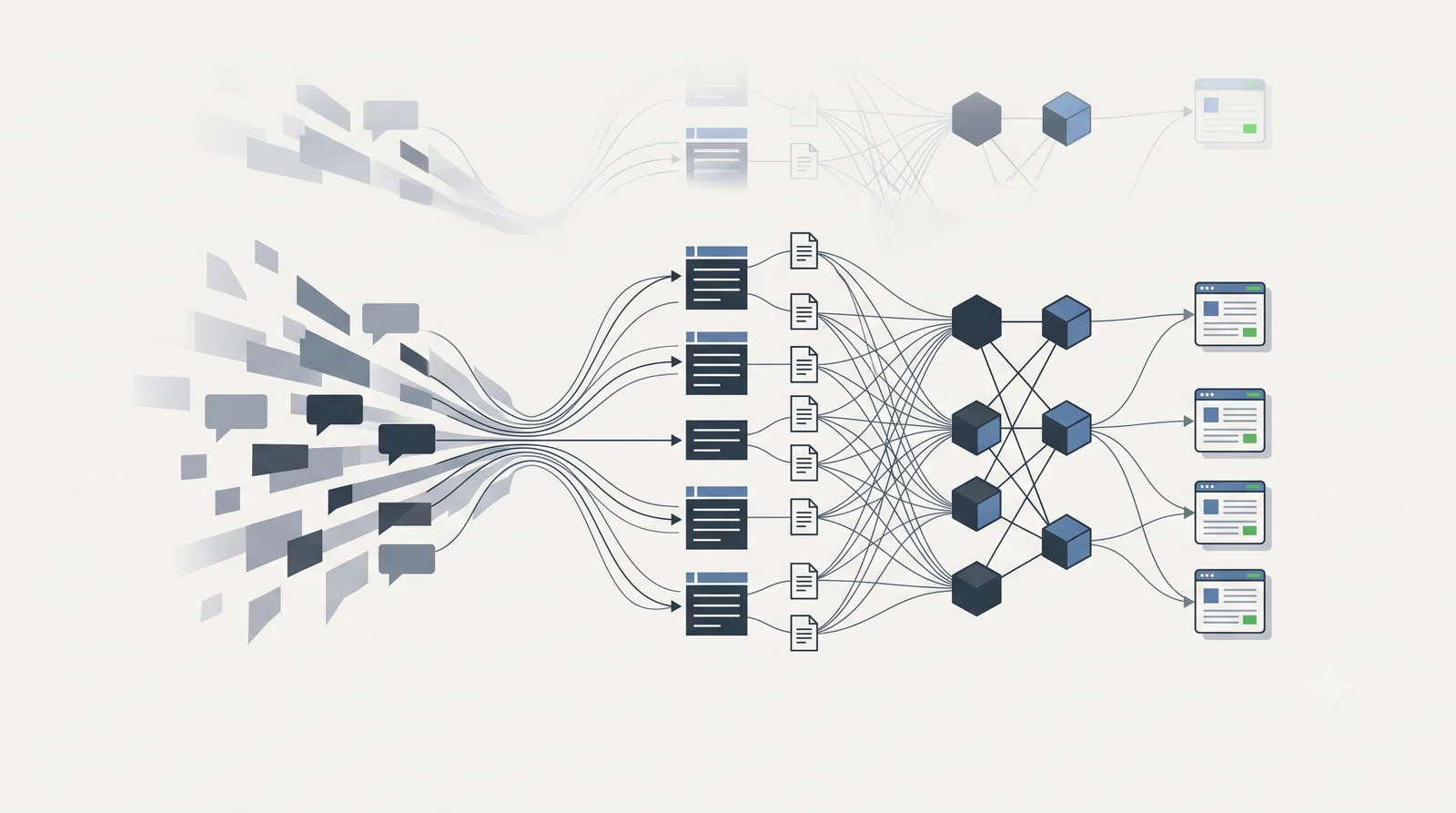
AI visibility, GEO and AEO tools in 2026
The terminology is less settled than the underlying buyer problem.
AI visibility tools usually emphasise whether a company appears, how often it appears, which competitors appear alongside it and which sources are associated with those answers. GEO tools often describe a broader optimisation workflow around generated search experiences. AEO tools use answer-engine terminology for substantially overlapping work.
Google now explicitly recognises both GEO and AEO as terms used around visibility in generative search, although Google treats optimisation for its own AI search features as part of SEO rather than a replacement discipline. Google Search Central
The software market overlaps just as heavily. Current products commonly combine some mixture of prompt monitoring, mentions, citations, source analysis, sentiment, competitor benchmarking, content recommendations and workflow tools. Semrush, Profound, Otterly, Writesonic, AthenaHQ, Peec AI and other platforms all cover different combinations of those jobs. Semrush
That makes the category label a poor basis for choosing a product. The practical question is:
What decision do you need the tool's evidence to support?
A team establishing a directional visibility baseline has different requirements from one changing product pages, reallocating budget or claiming that an intervention improved AI representation.
This distinction is becoming more important as the category matures. Providers can use different prompt sets, sampling methods, platform mixes and denominators and therefore return different answers for the same brand. For higher-stakes decisions, methodological disclosure, reproducibility and inspectable evidence matter more than a headline score alone.
The earlier Kojable AEO roundup already identified engine coverage, competitor benchmarking, prompt granularity, historical data, actionability, workflow integration and business measurement as buying dimensions. The missing layer is measurement fitness: whether those features observe the right population, calculate the metric you think they calculate and preserve enough evidence for the action you intend to take.
What should you check before trusting an AI visibility score?
An AI visibility score is useful only when you know what population and measurement process sit underneath it.
Before acting on any headline score, check:
| Check | Why it matters |
|---|---|
| AI surface | ChatGPT, Google AI Mode, AI Overviews, Gemini and other products expose different answer and source structures. |
| Market and language | Product availability and collected evidence can vary by geography and language. |
| Prompt source | The prompt set defines the buyer universe being measured. |
| Collection method | Live querying, indexed datasets and other architectures observe different things. |
| Observation time | Data retrieved today may describe an answer observed earlier. |
| Sample boundary | A bounded sample cannot support every full-corpus conclusion. |
| Metric denominator | A percentage is meaningful only when the eligible population is defined. |
| Failure treatment | Unsupported, failed and empty observations should not silently become zeroes. |
| Underlying evidence | Raw answers, citations or source records determine what can actually be investigated. |
Kojable encountered this directly when integrating DataForSEO LLM Mentions.
An Irish production workspace had 14 tracked topics. Planning across Google and ChatGPT initially produced 28 intended observations. After checking the exact market and platform capabilities, only the 14 Google AI Overview observations were supported. The 14 planned ChatGPT observations were unavailable for that market and should not have entered paid collection.
The buying lesson is broader than DataForSEO:
“Supports ChatGPT” is not the same statement as “supports the ChatGPT observation, geography and language I need.”
The same case study exposed a second distinction. DataForSEO returns indexed observations with provider timestamps. Kojable also records when it collected those observations. Those dates are not interchangeable: retrieving a provider row today does not establish that the underlying AI answer was generated today.
A provider should therefore be able to explain not only the number on the dashboard, but when and how the underlying observation came into existence.
Coverage, collection and sample boundaries
More platform logos do not automatically produce better evidence.
Coverage has at least five dimensions:
Surface: Which exact product or mode was measured?
Market: Which countries and languages are available?
Prompt universe: Which questions enter the sample?
Collection architecture: Is the system querying the product directly, reading an indexed dataset, using an API or combining several sources?
Sampling: How much of the available universe is actually retained?
Kojable's DataForSEO implementation deliberately collects one page of up to 50 rows for each eligible topic-platform observation, ordered by AI search volume. That controls cost and creates a useful directional sample, but it is not a complete copy of the provider corpus.
This changes what the resulting dashboard can responsibly say.
If a citation moves from just outside a top-50 sample to just inside it, it may appear newly discovered even though it existed in the underlying corpus before. A market change, platform change or collection-policy change can create similar comparability problems. Kojable therefore does not treat incomplete or incompatible collections as proof that a citation was exactly “gained” or “lost” across the entire corpus.
This is a useful procurement principle:
A bounded measurement system can be valuable without pretending to be complete.
The important question is whether the limitation is visible.
Metric integrity: mentions, citations and share of voice
“AI visibility” is an umbrella term. Underneath it sit different analytical units.
A mention is not a citation. A citation occurrence is not the same as citation coverage. A unique URL count is not a citation-frequency measure. A recommendation is different again.
| Metric | Question it answers | Example denominator | What it does not prove |
|---|---|---|---|
| Brand mention rate | How often was the company named? | Eligible responses | That the company was cited or recommended |
| Citation coverage | How often did an eligible response cite an owned source? | Eligible responses | Share of all citation occurrences |
| Citation share | What proportion of citation occurrences belonged to the company? | Eligible citation occurrences | Prompt share or recommendation share |
| Unique cited URLs | Which distinct owned pages appeared? | Normalised URLs | How frequently each page was cited |
| Competitor co-mention | Which competitors appeared in the same answer set? | Eligible responses | That the system prefers a competitor |
| Recommendation rate | How often was the company recommended in recommendation-intent answers? | Eligible recommendation-intent responses | Buyer conversion |
Kojable's DataForSEO implementation uses these distinctions explicitly. Citation Share of Voice is based on owned citation occurrences divided by accepted citation occurrences. Citation coverage instead uses accepted responses as the denominator. Brand mention rate uses accepted responses in which the brand is detected. Unique owned URLs are a separate URL-level measure.
Those are different questions. A provider can calculate each correctly while two dashboards still produce very different headline percentages because they chose different analytical units.
No data is not a measured zero
A second measurement problem appears when nothing is shown.
Kojable's production implementation distinguishes states including:
- unsupported platform/market combinations;
- successful requests that returned no rows;
- observations with no usable denominator;
- rows that arrived but did not meet the workspace relevance policy;
- very sparse samples;
- directional samples;
- stronger samples that cross an internal evidence threshold.
A null denominator should therefore produce unavailable, not 0%.
This is not semantic fussiness. “We measured the eligible population and found no owned citations” is a different statement from “we did not have an eligible population to measure”.
More rows do not automatically mean better measurement
The DataForSEO case study gives a particularly useful example.
Kojable retained 338 raw provider mentions. After applying the workspace relevance policy, 17 were accepted, 12 were marked ambiguous and 309 were excluded from the core metrics. The same retained evidence contained 2,938 normalised citation events from provider source records.
The excluded rows were not necessarily broken or invalid provider data. They failed Kojable's relevance test for the particular workspace.
That distinction matters because a broad topic can return semantically adjacent observations that have little value for the actual buyer decision. Counting everything can create a larger dataset while reducing the usefulness of the metric.
Kojable's classifier is also heuristic, not ground truth. It can accept weak observations or exclude useful ones, which is why ambiguous rows and classifier versions remain part of the retained evidence.
The lesson for buyers is straightforward:
Ask how relevance is decided before comparing sample size.
Deduplication can change share of voice
One provider response can sometimes be associated with more than one tracked topic.
Kojable keeps those topic relationships where they are analytically useful, but at portfolio level the underlying response is counted once for Share of Voice. Otherwise one repeated response could gain extra weight simply because several topics retrieved it.
If two tools both report “share of voice”, ask whether duplicate responses, sources, domains and prompt variants are treated the same way.
Prompt design, relevance and answer variability
A prompt library defines the world your visibility dashboard measures.
A programme dominated by branded prompts answers a different question from one built around category discovery, comparisons, use cases and recommendation prompts. A library built entirely from synthetic questions can also behave differently from one informed by Search Console, sales conversations, customer research or other observed demand.
This is where one useful idea from Kojable's earlier AEO article remains important: monitoring should be connected to the questions that matter in the buyer journey rather than treated as an isolated technical exercise.
There is no universal correct number of prompts.
More prompts can increase breadth. They do not automatically increase relevance.
Repeated runs solve another problem. Generative answers can vary when the same question is asked more than once, so prompt breadth and prompt repetition should not be treated as substitutes. A single answer is an observation; recurring behaviour across comparable runs provides stronger evidence of a pattern.
Before buying a tool, ask how it handles:
| Measurement choice | What to inspect |
|---|---|
| Prompt sourcing | Customer questions, search demand, synthetic generation or a mixture |
| Intent coverage | Discovery, comparison, validation, recommendation and branded questions |
| Prompt grouping | How topics, stages or personas are combined |
| Weighting | Whether every prompt contributes equally. |
| Repeated runs | Whether variability can be observed |
| Failed runs | Whether failures change the denominator |
| Geography | Whether prompts are run under comparable market conditions |
| Historical changes | Whether edits to the prompt set break period comparisons |
A score can be mathematically correct and still measure a prompt universe that does not represent the decision your team cares about.
From visibility data to diagnosis and action
The current market has moved beyond a clean division between “monitoring tools” and “action tools”.
Writesonic now combines AI visibility monitoring with an Action Center for content, citation and technical opportunities. AthenaHQ combines prompt-volume research, monitoring and an Action Center. Peec AI tracks visibility, sentiment, position and sources and has added an Actions layer. Profound combines Answer Engine Insights with broader workflow and agent capabilities. Writesonic
So the useful procurement question is no longer:
Does the tool give recommendations?
It is:
Does the recommendation follow from evidence specific enough to support it?
Suppose a tool finds that a publisher repeatedly appears around a group of AI answers. That can justify investigating the publisher, its recurring topics, how it describes the company and whether it is realistically actionable.
It does not by itself prove:
“This exact product page is causing the problem.”
Page-level recommendations need page-level evidence. Claims about why a model produced an answer require stronger evidence again.
Kojable's separate AI Citations Reference Entry makes the same distinction between observable attribution and inferred causality.
A practical action layer should therefore answer:
| Question | Why it matters |
|---|---|
| What gap was observed? | Keeps the recommendation tied to a real measurement |
| What evidence supports it? | Separates evidence from interpretation |
| How specific is the evidence? | Prevents publisher-level evidence becoming an unsupported page-level action |
| What should change? | Converts diagnosis into an executable task |
| Where should it change? | Makes ownership clear |
| Who owns it? | Distinguishes content, product, PR, technical and third-party work |
| What will be retested? | Defines how later movement will be assessed |
Kojable's operating model is Monitor → Diagnose → Improve → Verify. Monitoring establishes the current representation. Diagnosis identifies recurring answer patterns, source associations, outdated information and missing proof. Improvement turns that diagnosis into a practical plan. Verification retests comparable questions to see what changed.
The distinction is not that every competing platform stops at monitoring. The useful distinction is the connection between observable representation, evidence-backed diagnosis, implementation guidance and comparable retesting.
How do current tools compare by capability and operating fit?
There is no defensible universal “best GEO tool”. The useful comparison is what each product measures, how much evidence users can inspect and what operating workflow it supports.
Operating fit is Kojable's editorial synthesis of the verified capabilities below, not a vendor-provided ranking or an independent accuracy score.
| Platform | Current measurement emphasis | Evidence and workflow emphasis | Practical operating fit |
|---|---|---|---|
| Semrush AI Visibility Toolkit | Brand mentions, AI Visibility Score, prompts, competitors, tone and cited-page analysis | Combines visibility reporting with recommendations inside the broader Semrush environment | Teams already combining SEO and AI-search analysis. Semrush |
| Profound | Visibility, share of voice, sentiment, position and citation share | Citation analysis, competitor views, exports and agent/workflow capabilities | Teams wanting detailed AI-answer analytics and exportable evidence. Profound |
| OtterlyAI | Prompt monitoring, brand mentions, citations and competitor visibility | Prompt-level responses, citation detail, exports and API access | Teams wanting focused monitoring with accessible underlying response data. OtterlyAI |
| Writesonic | AI visibility, citations, competitors and related search signals | Action Center prioritises content, citation and technical opportunities alongside content workflows | Content-led teams wanting monitoring and execution in one environment. Writesonic |
| AthenaHQ | Prompt Volume and GenAI brand monitoring | Action Center, with additional agency and ecommerce workflows | Teams wanting prompt research, monitoring and action tooling together. AthenaHQ |
| Peec AI | Visibility, sentiment, position, competitors and source patterns | Source analysis, analytics workflows and prioritised actions | Marketing teams and agencies focused on AI-search analytics and competitive monitoring. Peec AI |
| Conductor | AI mentions, citations and prompt tracking | Combines AI signals with rankings, Search Console, web analytics and technical site information | Enterprise organic-search teams wanting AI visibility in a broader search platform. Conductor |
| Scrunch | Prompt performance, citations and AI-search visibility | Monitoring alongside bot-error, site and AI-customer-experience tooling | Teams treating AI discovery as part of a broader agent/customer experience problem. Scrunch |
| Evertune | Multi-model AI visibility and change over time | Suggested actions can extend into content, advertising and partner workflows | Brands connecting AI visibility with wider marketing execution. Evertune |
| SE Visible | Visibility, sentiment, citations, competitors, prompts and source-related metrics | Model, topic and period comparison within SE Ranking's wider search ecosystem | Search and product-marketing teams wanting broad AI visibility reporting. SE Visible |
| HubSpot AEO | Visibility score, prompt tracking and citation analysis | Prioritised recommendations, with some actions available through HubSpot content and social workflows | Existing HubSpot teams that want AEO connected to their marketing system. XFunnel technology became HubSpot AEO after HubSpot's acquisition. HubSpot |
| Ahrefs Brand Radar | AI share of voice, mentions, citations, impressions and custom prompts | Large indexed AI-response dataset, custom prompt tracking, historical views and API/reporting options | Search and brand teams wanting AI visibility alongside existing Ahrefs research data. Ahrefs |
| AirOps | AI-search visibility, mentions, citations and page-level analysis | Connects monitoring with analytics and governed content workflows | Content and SEO operations teams moving from visibility analysis into scaled execution. AirOps |
| Frase | AI visibility alongside GEO/content scoring | Connects visibility tracking with content optimisation and SEO research | Content teams wanting AI-search measurement inside an optimisation workflow. Frase |
Pricing is deliberately excluded here. Plans, prompt allowances, platform access, service layers and billing units change often enough that they deserve their own comparison. Kojable's separate AEO/GEO Software Pricing Reference Entry covers that procurement question.
Beyond monitoring: the wider AEO tool stack
The 12 March AEO article contained one useful idea that should survive consolidation: a complete AI-representation programme can require more than a visibility dashboard.
The useful way to preserve that idea is as an operating stack, not as a claim that every company needs six separate tools.
| Operating job | What the team needs |
|---|---|
| Question and intent research | Evidence about which buyer questions deserve monitoring |
| AI representation monitoring | Comparable answers, mentions, citations, competitors and source observations |
| Source and evidence diagnosis | A way to inspect recurring sources, outdated claims, missing proof and evidence gaps |
| Owned information improvement | Content, documentation, positioning, structured company information and product evidence. |
| Third-party work | PR, directories, reviews, partners or other realistic external evidence opportunities where justified |
| Content and workflow execution | A practical way to implement the actions that diagnosis supports |
| Analytics | Search, referral and business signals kept separate from answer-engine measurement |
| Verification | Comparable retesting after changes |
One platform may cover several of these jobs. Another team may combine specialist tools with existing SEO, analytics, content and communications systems.
The right architecture depends on where the operational gap sits.
A company that already has strong SEO and content operations may only need reliable AI representation measurement and diagnosis. Another may value an integrated system that moves directly from visibility into content workflows. A third may need enterprise reporting and governance more than content generation.
Tool selection should follow the job, not the label.
Verification and change over time
Trend charts can create a false sense of certainty if the underlying observations are not comparable.
To assess movement responsibly, preserve the conditions that materially affect the measurement:
| Comparison condition | What should remain visible |
|---|---|
| Prompt | Same question or declared prompt-panel version |
| Platform/surface | Same product and mode where possible |
| Market/language | Same collection context |
| Runs | Same repeated-run design |
| Sampling | Same sample rules |
| Eligibility | Same inclusion and exclusion rules |
| Metric | Same numerator and denominator |
| Configuration | Any material methodology change recorded |
The DataForSEO top-50 example shows why this matters. A source crossing a sample boundary can appear newly discovered without being genuinely new to the wider provider corpus. Exact “new” and “lost” citation claims therefore require compatible and sufficiently complete collections.
Even when the measurement is comparable, causality is another question.
If an answer changes after a page update, the change itself is a direct observation.
If similar movement appears across repeated comparable checks, it becomes a recurring pattern.
A plausible relationship between the intervention and the movement is still an interpretation.
Calling the movement a demonstrated intervention effect requires a design strong enough to justify that inference.
This is why verification should not mean “take another screenshot”.
It means preserving a baseline, retesting under comparable conditions and matching the strength of the conclusion to the strength of the design.
GEO, AEO and SEO in the wider search stack
GEO and AEO do not make SEO obsolete.
For Google's own AI search experiences, Google says the same foundational SEO practices remain relevant because AI Overviews and AI Mode use Google's Search systems. Google also says there is no special AI-specific schema or separate technical requirement that websites must implement merely to appear in these generative features. Google Search Central
That does not mean every AI platform works like Google.
ChatGPT, Gemini, Perplexity, Claude and other answer environments have different products, retrieval systems and source presentations. Platform-specific evidence should therefore remain platform-specific.
The practical difference is measurement scope.
Traditional search reporting can tell you about rankings, impressions, clicks and landing-page performance.
AI visibility and GEO tooling can add another layer:
- whether the company appears in generated answers;
- how it is described;
- whether competitors are recommended;
- which visible citations or source relationships appear;
- how those observations vary by prompt and platform.
These signals should complement rather than replace search and business measurement.
The old AEO article's binary distinction between traditional SEO and AEO was too strong. The more useful view is a connected search stack in which the tools answer different questions.
How should you choose the right operating model?
A “best AI visibility tool” list is useful only after the buyer has defined the job.
| If your primary need is… | Prioritise… |
|---|---|
| Establish a baseline | Reliable prompt and mention monitoring |
| Compare competitors | Comparable prompt sets and clearly defined share metrics |
| Diagnose citations and sources | Inspectable source evidence and explicit analytical units |
| Monitor internationally | Exact market, language and surface coverage |
| Produce or update content | Integrated content/workflow capabilities. |
| Investigate representation gaps | Recommendations tied to observable evidence |
| Serve multiple clients | Account governance, exports and repeatable reporting |
| Connect AI and SEO data | Search Console, analytics and SEO integrations. |
| Measure improvement | Comparable historical retesting |
| Make high-stakes decisions | Stronger methodological disclosure and reproducibility |
Before procurement, ask one final question:
If this dashboard changes next month, will we understand enough about the measurement to know what changed?
If the answer is no, a larger feature list will not solve the underlying problem.
Bottom line
AI visibility tools are becoming more capable, but more capability does not remove the need to understand the evidence.
A useful platform should make it possible to answer four questions:
Monitor: What did the AI environment actually show?
Diagnose: What recurring representation or evidence gap deserves attention?
Improve: What justified action should the team take, where and how? Verify: Can later observations be compared fairly with the baseline?
That is the standard Kojable uses for its own AI representation monitoring and improvement system. It does not require every observation to be research-grade. It requires the evidence standard to rise with the importance and specificity of the decision. See how Kojable works.
If you are evaluating how to move from AI visibility data to diagnosis, action and comparable retesting, book a demo to see the Kojable workflow.
For package and cadence comparisons, review pricing and monitoring plans.
Quick answers
Frequently asked questions
What is an AI visibility tool?
An AI visibility tool measures how a company, product or source appears across defined AI-generated search and answer environments, often tracking brand mentions, citations, source occurrences, prompts, competitors, sentiment, recommendation presence and change over time.
Vendors can define and collect these metrics differently, so interpret any headline score alongside its prompt set, platforms, sampling method and denominator.
Are GEO, AEO and AI visibility tools the same thing?
They overlap substantially but are not governed by a universal category standard: “AI visibility tool” often emphasises measurement, while GEO and AEO platforms may also include diagnosis, recommendations, content workflows or optimisation features.
Current offerings increasingly blur those boundaries, so buyers should compare actual capabilities rather than assume a category label defines the product.
What should an AI visibility tool measure?
At minimum, the measurement should correspond to the decision the team cares about.
That may include brand mentions, citation coverage, citation share, recommendation presence, competitors, sentiment, prompt-level answers and source observations. The tool should also explain the analytical unit and denominator behind aggregate percentages.
Are AI visibility scores accurate?
There is no meaningful universal accuracy percentage.
A provider may calculate its formula correctly while measuring a prompt set, sample or platform mix that does not fit your business question, so reliability depends on measurement fitness as well as calculation accuracy.
For higher-stakes decisions, look for methodological disclosure, reproducibility, sample documentation and inspectable evidence rather than a headline score alone.
How many prompts should a GEO tool track?
There is no universal number.
The useful prompt count depends on the breadth of the buyer journey, the number of products and markets being monitored, platform coverage, monitoring cost and the need for repeated observations.
A smaller set of commercially relevant questions can be more useful than a much larger synthetic set that poorly represents real buyer decisions.
What is the difference between no visibility and no data?
No visibility means an eligible observation was made and the event did not occur; no data can mean the platform-market combination was unsupported, no usable or relevant rows existed, or no denominator could be established.
Those conditions should not all appear as 0%. Kojable's DataForSEO implementation preserves them as distinct evidence states.
Can a GEO tool tell me which page caused an AI answer?
Not from source occurrence alone.
An exact cited URL supports page-level investigation, but it does not establish that the page, its copy, backlinks or another feature caused the generated answer.
Source association is evidence; causality requires a stronger design.
How do GEO tools differ from SEO tools?
SEO tools primarily measure and support conventional search work such as rankings, technical health, queries, links and organic performance, while GEO and AI visibility tools add generated-answer signals such as mentions, citations, competitors, prompts and AI-specific framing.
The disciplines overlap. Google's own guidance says established SEO fundamentals continue to apply to its generative Search features. Google Search Central
Should I choose the tool with the highest visibility score?
No.
The highest displayed score may reflect a different prompt set, competitor group, model mix, weighting method or denominator.
Choose the tool whose measurement design and workflow best support the decisions your team needs to make.
Do I need one platform for the whole AEO stack?
No.
A team can use one integrated platform or combine specialist tools for jobs such as intent research, visibility monitoring, content operations, entity consistency and analytics.
The important requirement is that evidence moves cleanly from monitoring into diagnosis, implementation and verification without one system silently changing the meaning of another system's data.